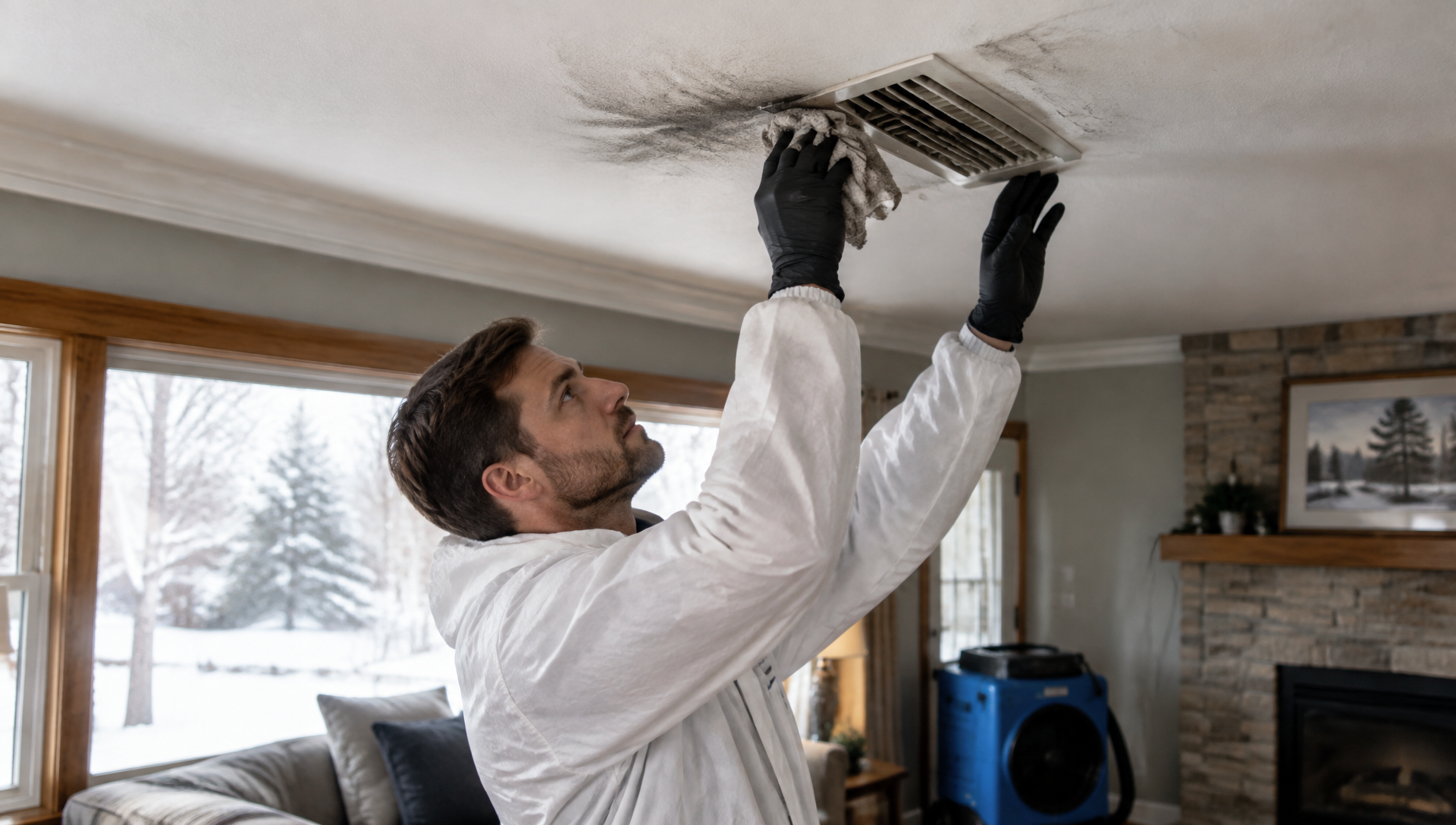
Furnace puffback cleanup is one of those jobs nobody plans for. You flip the heat on for the first real cold night in Eau Claire, hear a muffled bang or rumble from the basement, and the next morning you notice gray smudges around the vents, black streaks on the ceiling, or a strange oily smell in the house. That is often the sign of a puffback, and the soot it leaves behind can travel a lot farther than you would expect.
This guide explains what a puffback is, what to do first, why wiping it up yourself can make things worse, and how professional fire and smoke damage restoration in Eau Claire handles the cleanup.
What Is a Furnace Puffback?
A puffback happens when fuel inside an oil-burning furnace or boiler does not ignite cleanly and then lights all at once. The small explosion inside the combustion chamber can push soot and smoke out through the flue, the burner area, or the ductwork.
Because a forced-air system is built to move air through every room, puffback soot can ride the ducts and settle on walls, ceilings, carpet, curtains, furniture, and belongings throughout the home.
Signs of Puffback Soot in Your Home
Puffback residue is easy to mistake for dust at first. Watch for these clues, especially right after the heating season starts:
- Black or gray streaks around supply registers and return vents
- Dark lines on ceilings or along wall corners where air moves
- Fine, oily soot on furniture, window sills, and countertops
- Dingy cobweb-like strands hanging from corners (soot clings to existing webs)
- A smoky, oily, or burnt odor that gets stronger when the heat runs
- Soot around the furnace, the burner, or the chimney connection
First Steps Before Furnace Puffback Cleanup
Shut the System Down and Call an HVAC Pro
Turn off the furnace at the thermostat and the service switch if you can do so safely. Running it again can spread more soot and may repeat the misfire. A qualified heating technician should inspect the burner, flue, and chimney connection before the system is used again. If you smell fuel or suspect a safety issue, leave the home and contact the appropriate emergency service.
Keep the House Warm Another Way
In a Chippewa Valley winter, a home without heat can cool down fast. Use safe, approved temporary heat and keep an eye on pipes in exterior walls and unheated spaces. Our winter water damage prevention checklist covers simple ways to protect plumbing, and if a line does let go, our guide on frozen pipe water damage walks through what to do next.
Document Everything
Take photos and video of the soot in each room, the vents, the furnace area, and any affected belongings before you clean or move anything. Documentation may help if you decide to file a claim. Coverage for puffback damage varies by policy and by the cause, so check with your insurance agent about your specific situation.
Why You Should Not Wipe Puffback Soot Yourself
It is tempting to grab a rag and an all-purpose cleaner, but puffback soot is fine and oily. Rubbing it with a damp cloth often smears it deeper into paint, drywall texture, and fabric, which can turn a cleanable surface into one that needs repainting or replacement.
A few other things to avoid:
- Do not run the furnace or central air until the system has been checked
- Do not wash soot-covered clothing or bedding with your regular laundry before asking how it should be handled
- Do not paint over soot stains; staining and odor often come back through
- Do not use scented sprays to cover the smell, since that does not remove the residue
How Professional Furnace Puffback Cleanup Works
Every puffback is different, so the work starts with an assessment of where the soot traveled and which materials were affected. From there, the scope may include:
- Soot removal: Walls, ceilings, and other surfaces are cleaned with methods matched to the residue and the finish, starting with dry soot removal where appropriate so the residue is lifted instead of smeared.
- Air scrubbing and deodorization: Air scrubbers help capture airborne particles during cleaning, and deodorization targets remaining odor after the source has been addressed.
- Contents and textiles: Furniture, clothing, curtains, and other belongings can be cleaned on site or inventoried and packed out for cleaning, depending on what they need.
- Insurance documentation: Photos and a written scope help show what was affected and what work was done.
If you are wondering why a smell can hang on even after the walls look clean, our article on why smoke odor returns after a fire explains how residue hides in porous materials. Many of the same ideas apply to a kitchen fire smoke damage cleanup, just with a different starting point.
When Cleaning Is Not Enough
Some finishes can be cleaned and look great again. Others, like flat paint, textured ceilings, or materials that were already worn, may hold onto staining. In those cases, sealing, repainting, or replacing sections can be the better choice. Steamatic's structure cleaning and repair team handles deep structural cleaning, drywall, ceilings, painting, and trim, so one local team can take the room from sooty to finished. Our post on water damaged drywall repair gives a good picture of how that repair side usually goes.
Is Puffback Soot the Same as Mold?
No, but the two get confused. Dark spots that wipe off as a greasy smudge and line up with vents or air paths are more likely soot. Spots that keep growing, show up in damp areas, or come with a musty smell are a different issue. If you are not sure, our list of the signs of hidden mold in your home can help, and Steamatic's mold remediation service is there if growth is found. If a winter heating failure also led to a leak, our water damage restoration services cover extraction and drying.
Furnace Puffback Cleanup FAQ
Can I keep living in the house after a puffback?
It depends on how much soot was released and where it went. A light puffback may affect only a few rooms, while a heavier one can reach the whole house. The restoration team can walk the property with you and talk through options, including packing out belongings if that makes sense.
Does Steamatic fix the furnace?
No. Steamatic focuses on cleaning and restoring your home and belongings after the soot is released. The furnace, burner, flue, and chimney should be inspected and repaired by a qualified heating professional.
Will insurance cover furnace puffback cleanup?
It depends on your policy and what caused the puffback. Some policies treat a sudden event differently than long-term wear or lack of maintenance. Your insurance agent is the best source for what your policy includes, and Steamatic can help document the damage and the cleanup work.
Furnace Puffback Help in Eau Claire
Steamatic of Eau Claire, operated by TRAC Solutions LLC, helps homeowners in Eau Claire, Altoona, Chippewa Falls, Lake Hallie, Menomonie, and nearby Chippewa Valley communities with soot removal, deodorization, contents cleaning, and repairs after a puffback. Serving the area since 2007, the local team can help you get the soot out and the house back to normal.
Soot Streaks Around Your Vents?
Call Steamatic of Eau Claire at 715-834-8822 for 24/7 restoration help. The team can assess where the soot traveled, explain the cleanup plan, and recommend the next appropriate step for your home.