
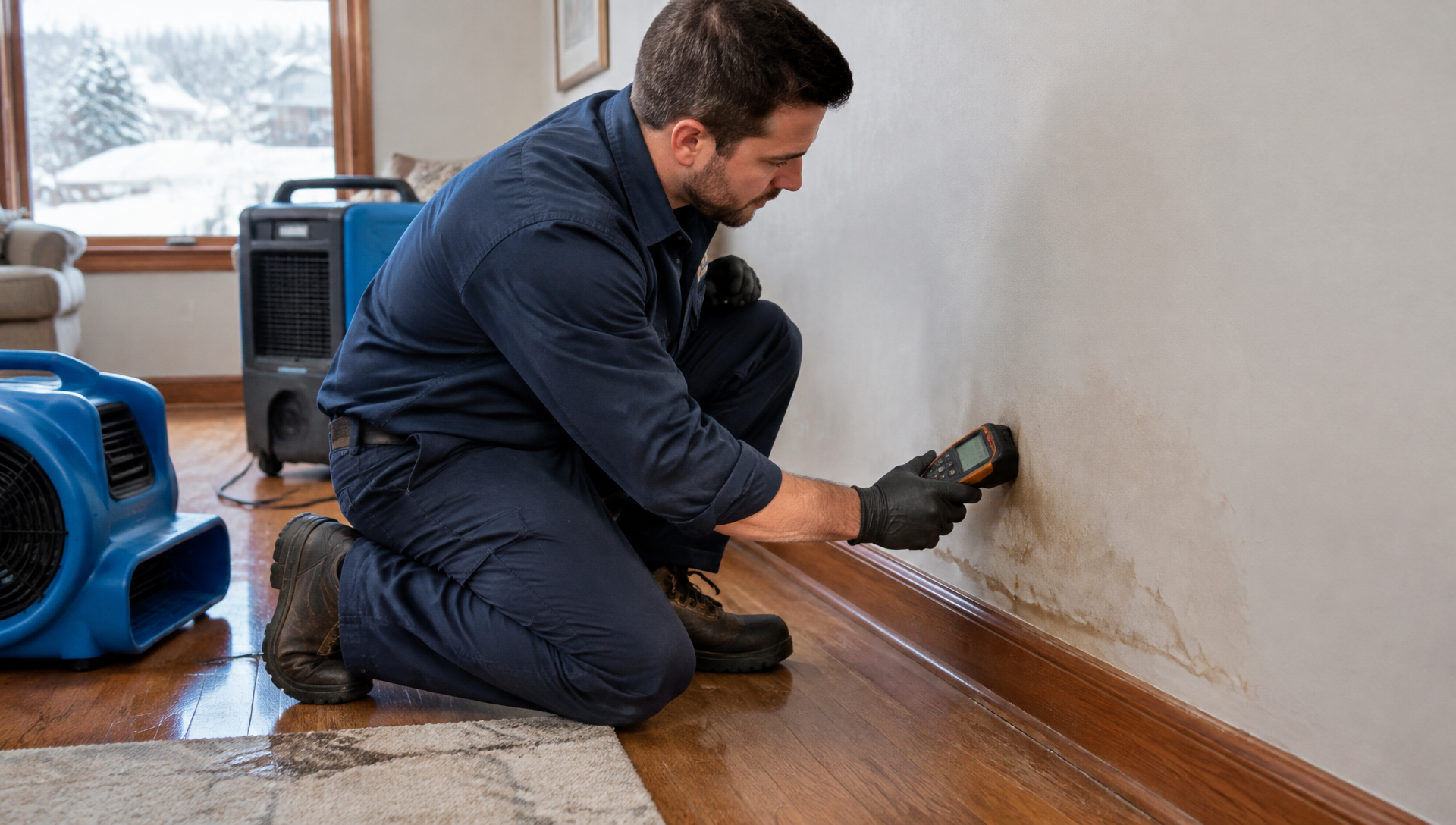
Water damaged drywall repair is one of the most common questions we hear after a leak. Maybe a pipe let go under the bathroom sink, a dishwasher line failed, or an ice dam pushed meltwater into an upstairs ceiling. Now you are looking at a soft spot, a bubbling seam, or a brown ring and wondering whether a little patch and paint will do the job. For homeowners in Eau Claire and across the Chippewa Valley, the honest answer is that it depends on how wet the wall got, how long it stayed wet, and what kind of water it was.
This guide walks through how to tell what is going on behind the surface, when drywall can be dried and saved, when it is better to cut it out, and how structure cleaning and repair in Eau Claire gets the room back to finished.
Signs Your Drywall Has Water Damage
Some signs are easy to spot, and some take a closer look:
- Yellow or brown stains, often with a darker ring at the edge
- Paint that bubbles, blisters, or peels away from the wall
- Soft or spongy spots that give when you press lightly
- Bulging, sagging, or bowing, especially on ceilings
- Swollen or crumbling drywall along the bottom of a wall near the floor
- A musty smell in the room, even after the surface looks dry
Keep in mind that the stain you see is usually smaller than the wet area. Water wicks up and sideways through gypsum and can travel inside a wall cavity before it ever shows on the surface.
First Steps Before Any Water Damaged Drywall Repair
Stop the Water and Stay Safe
Shut off the water at the fixture or the main if you can do it safely. If water is near outlets, switches, or a light fixture, turn off power to that area from a dry spot. Keep people and pets out from under a sagging ceiling.
Document What You See
Take photos and video of the stains, the source of the leak, and any damaged belongings before you move things around. Documentation may support an insurance claim, but coverage varies by policy and the cause of the loss, so check with your agent about your situation.
Do Not Paint Over It Yet
Stain-blocking primer and a fresh coat of paint can make a wall look fine for a while. If the drywall, insulation, or framing behind it is still damp, the stain often bleeds back through, and trapped moisture can lead to bigger problems later.
Can Wet Drywall Be Saved?
Sometimes it can. Drywall that got wet from a clean water source, was caught quickly, and still feels firm may be dried in place. A restoration team uses moisture meters to map how far the water traveled, then sets air movers and dehumidifiers to dry the wall. Readings are checked as drying continues, so the decision is based on numbers instead of how the surface looks. Our water damage restoration services cover this extraction, drying, and monitoring.
If you have dealt with a burst line before, our guide on frozen pipe water damage explains the drying side of things in more detail.
When Drywall Needs to Be Replaced
In many situations, cutting out the damaged section is the better choice. Replacement is usually the right call when:
- The drywall is soft, crumbling, swollen, or sagging
- The water came from a sewage backup or outside floodwater
- Insulation behind the wall is soaked and needs to come out
- There is visible growth or a persistent musty odor
Water from a sewer line or a flooded yard can carry contaminants, and porous materials like drywall and insulation that absorbed it generally should be removed, not cleaned in place. Our article on sewage backup cleanup safety explains why. If a storm sent water into the lower level, our guide to basement flooding first steps is worth a read.
Ceilings Deserve Extra Caution
Ceiling drywall is held up by fasteners, and wet gypsum gets heavy and weak. A ceiling that is sagging or bowing should be handled by professionals rather than left to dry on its own. Winter roof leaks are a frequent cause here in Wisconsin, and our post on ice dam water damage covers what to watch for upstairs.
Watch for Mold Behind the Wall
The paper face of drywall and the dark, enclosed space inside a wall can give mold what it needs when moisture lingers. If you notice a musty smell, spotting along the bottom of a wall, or stains that keep coming back, it is worth a closer look. Our list of the signs of hidden mold in your home is a good place to start.
Try not to disturb suspected growth yourself. If mold is found, Steamatic's mold remediation service handles removal of affected materials, and you can read about how containment protects your home during mold remediation.
How Professional Drywall Repair Works
Once the structure is dry, the rebuild can start. Here is what that typically looks like:
- Remove and replace: Damaged sections are cut out, and wet insulation is replaced where needed.
- Hang and finish: New drywall is hung, taped, and finished so the seams blend into the existing wall or ceiling.
- Prime and paint: Repaired areas are primed and painted to match the rest of the room as closely as possible.
- Trim and flooring: Baseboards, door casing, and flooring that took on water can be repaired or replaced to complete the space.
Steamatic's drywall, ceiling, paint, and trim repair team handles these steps, so you can work with one local team from drying through the finished room instead of coordinating several contractors.
What About Drywall After a Fire?
Water is not the only thing that damages walls. Water used to put out a fire can soak drywall, and smoke residue can work into the surface. In those cases, soot cleaning, deodorization, and drying often come before repairs. Learn more about our fire and smoke damage restoration and what to expect after a kitchen fire.
Water Damaged Drywall FAQ
Can I just cut out the stain and patch it myself?
For a small, fully dry spot from a one-time drip, a patch may be all you need. The risk is that the wet area is often larger than the stain, and moisture inside the wall cavity or insulation can be missed. A moisture check before patching helps you avoid redoing the work later.
How do I know if the wall is dry inside?
Touch and appearance are not reliable. Restoration technicians use moisture meters to compare wet areas to unaffected materials and track readings until drying goals are met.
Will insurance pay for drywall repair?
It depends on your policy and what caused the damage. Sudden leaks are often handled differently than long-term seepage or floodwater, and some policies have exclusions or limits for mold and sewer backups. Your insurance agent can explain your coverage, and Steamatic can help document the damage and the work.
Drywall and Water Damage Help in Eau Claire
Steamatic of Eau Claire, operated by TRAC Solutions LLC, helps homeowners in Eau Claire, Altoona, Chippewa Falls, Lake Hallie, Menomonie, and nearby Chippewa Valley communities with water damage restoration, structural drying, and drywall, ceiling, and finish repairs. Serving the area since 2007, the local team can take a wet wall from damaged to done.
Stained, Soft, or Sagging Drywall?
Call Steamatic of Eau Claire at 715-834-8822 for 24/7 restoration help. The team can check where the water went, set up drying, and recommend the next appropriate step for your walls and ceilings.