
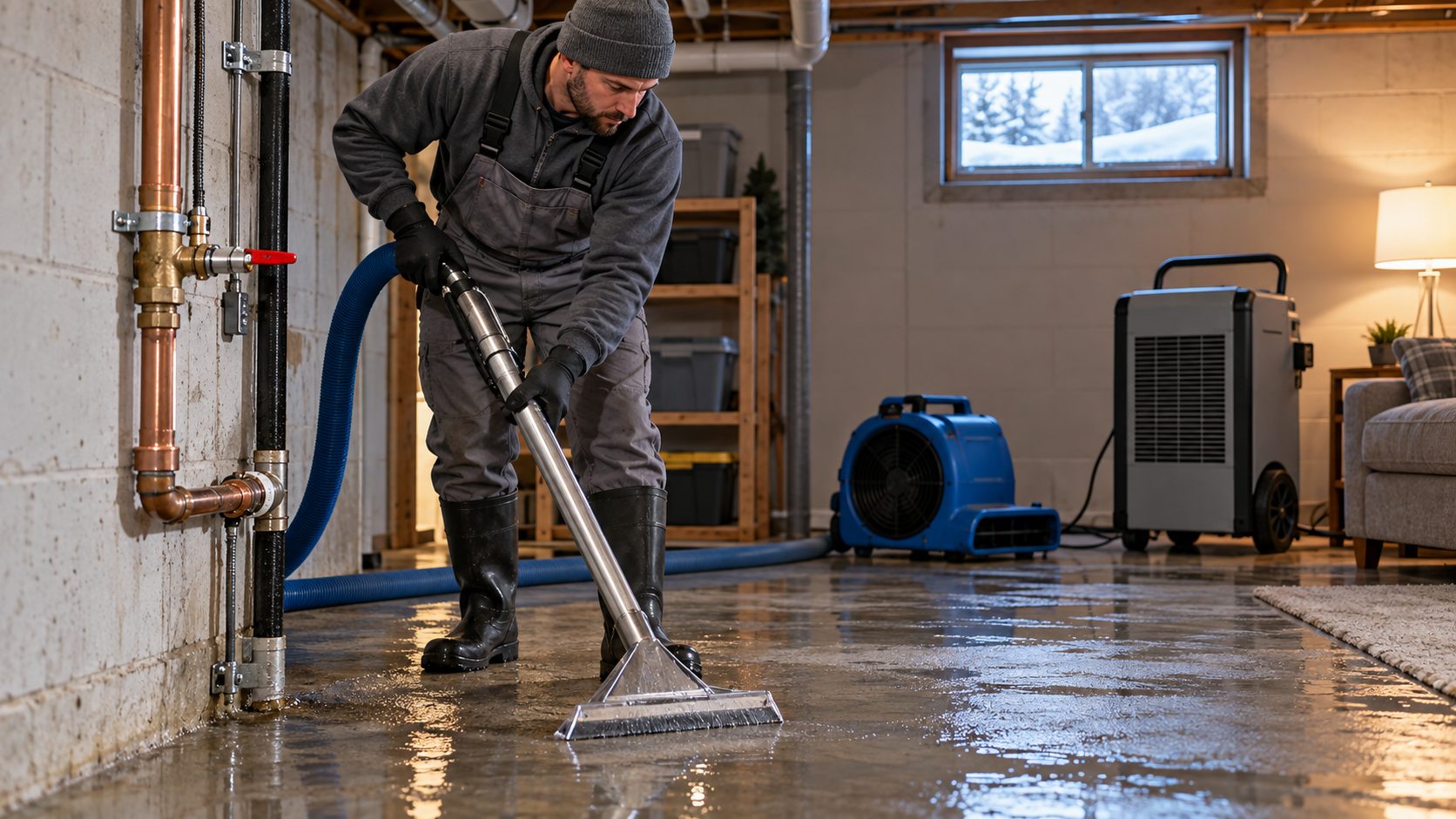
A frozen pipe can split quietly and release water only after temperatures rise. By the time a homeowner notices dripping, staining, or standing water, moisture may already have reached drywall, flooring, cabinets, insulation, or stored belongings. Quick action can limit how far the damage spreads, but safety comes first.
Steamatic of Eau Claire, operated by TRAC Solutions LLC, provides 24-hour water extraction, structural drying, moisture monitoring, cleanup, repairs, and insurance documentation in Eau Claire and surrounding Chippewa Valley communities.
Shut Off the Water If It Is Safe
Locate the main water shutoff and stop the flow if you can reach it without entering standing water near outlets, appliances, or electrical panels. If there is an electrical concern, stay out of the affected area and contact the appropriate emergency professional. Do not use household vacuums to remove water.
Document the Visible Damage
Take photos or video from a safe location before moving damaged items. Record the affected rooms, visible water lines, wet materials, and the apparent pipe source. Keep receipts and notes from the plumber and restoration team. Documentation may help support an insurance claim, depending on the cause of loss and the policy terms.
Remove Standing Water and Find Hidden Moisture
Standing water should be extracted before controlled drying begins. The visible puddle is only part of the loss; water can travel beneath flooring, behind walls, and into framing. Professional moisture meters help map the affected area so equipment can be placed where it is needed and drying progress can be measured.
Review Steamatic's water damage restoration services for emergency extraction, dehumidification, daily monitoring, and insurance claim support.
Allow the Structure to Dry Before Repairs
Air movers and dehumidifiers are used to remove moisture from wet building materials and the surrounding air. Equipment should not be switched off or moved without checking with the restoration team. Drying time varies with the materials, saturation, temperature, and extent of the loss; verified moisture readings are more useful than appearance alone.
Watch for Secondary Damage
Drywall can soften, flooring may warp, and trapped moisture can contribute to mold growth. Steamatic states that damp materials may begin developing mold within 24 to 48 hours under suitable conditions. A musty odor or new discoloration after a water loss should be evaluated rather than covered with paint or cleaned without correcting the moisture source.
If growth is discovered, learn about the company's mold remediation service and the steps used to contain, remove, and address affected materials.
Complete the Necessary Repairs
Once drying goals are reached, damaged drywall, flooring, paint, trim, and other finishes may need repair or replacement. Coordinating restoration and repairs through one documented scope can reduce gaps between the drying phase and reconstruction.
Steamatic's structure cleaning and repair services cover the work needed to move a property from dry to finished.
Reduce the Risk Before the Next Freeze
Insulate vulnerable pipes, seal cold-air openings near plumbing, disconnect outdoor hoses, and keep interior temperatures consistent during cold weather. Know where the main shutoff is located and keep the path clear. If a pipe appears frozen, avoid open flames and contact a qualified plumbing professional for safe thawing and repair.
Request Water Damage Help in Eau Claire
Steamatic of Eau Claire serves Eau Claire, Altoona, Chippewa Falls, Lake Hallie, Menomonie, and nearby communities. For active water damage, call the 24-hour line so the team can assess the loss and begin the next appropriate step.