
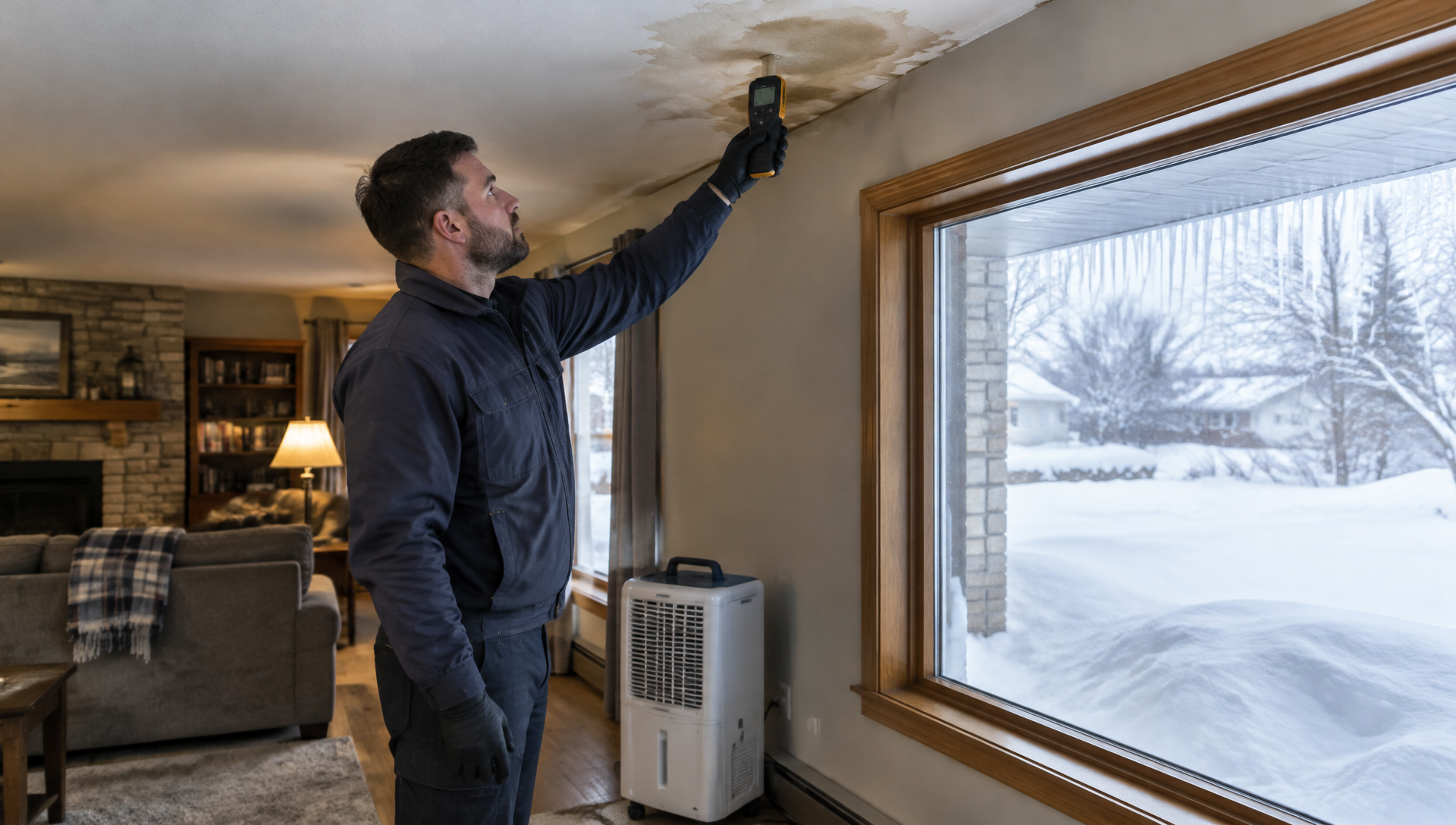
Ice dam water damage often shows up quietly. A brown ring on a bedroom ceiling, a drip near a window frame, or peeling paint along an upper wall can all be signs that melting snow is backing up under your roof and working its way inside. For homeowners in Eau Claire and across the Chippewa Valley, ice dams are a normal part of winter, but the water they push into a home should be handled quickly and carefully.
This guide walks through what an ice dam is, what to do when you spot water coming in, and how professional water damage restoration in Eau Claire can help dry things out and get your home back to normal.
What Causes Ice Dam Water Damage?
An ice dam forms when warm air from the living space escapes into the attic and heats the underside of the roof. Snow on the upper roof melts, runs down toward the colder eaves, and freezes again at the edge. Over several days that ridge of ice grows, and new meltwater has nowhere to go. It pools behind the ice and can seep under shingles, past the roof deck, and into the attic.
From there, water can soak insulation, run along rafters, and drip onto the top of your ceiling drywall. It may also travel down inside exterior walls, which is why stains sometimes appear around windows or along baseboards on a lower floor. By the time you notice a spot, moisture may have spread well beyond it.
Signs Water Is Getting Inside
Ice dam leaks can be easy to miss because they often start in spaces you don't visit. Watch for these warning signs during and after a cold snap:
- Yellow or brown stains on ceilings, especially near exterior walls
- Bubbling or peeling paint on upper walls or around window trim
- Damp or matted insulation in the attic
- Water dripping from light fixtures, vents, or window frames
- A musty smell in upstairs rooms or the attic
- Thick icicles and a visible ridge of ice along the roof edge
What to Do First When You Find a Leak
Put Safety First
If water is dripping near a light fixture, outlet, or ceiling fan, turn off power to that area at the breaker if you can do so from a dry spot. A sagging or bulging ceiling can hold a surprising amount of water, so keep people and pets out from under it. Please don't climb onto an icy roof or chip at the ice with a hammer or shovel. That can injure you and damage shingles, and roof work is best left to a qualified roofing contractor.
Contain the Water You Can See
Set out buckets or towels to catch drips, and move furniture, electronics, and keepsakes away from the wet area. If carpet or rugs are getting soaked, lift what you safely can and set it somewhere dry.
Document Everything
Take photos and video of ceiling stains, wet insulation, damaged belongings, and the ice along the roof edge. Write down when you first noticed the problem. Documentation can be helpful if you decide to file a claim. Keep in mind that coverage for ice dam damage varies by policy, and some policies treat the interior water damage differently from the roof itself, so check with your insurance agent about your specific situation.
Why Ice Dam Water Damage Needs Professional Drying
Once the drip stops, it's tempting to wait for the stain to dry and paint over it. The problem is that water from an ice dam usually soaks into materials you can't see: attic insulation, the back side of drywall, wall cavities, and wood framing. Surface drying doesn't tell you what's going on inside.
A restoration team uses moisture meters to map where water traveled, then sets air movers and dehumidifiers to dry the structure. Readings are checked as drying continues so equipment comes out only when materials are actually dry. Wet insulation that has compressed or stayed saturated may need to be removed and replaced. If you've read our guide on frozen pipe water damage, the drying process is very similar, just starting from the top of the house instead of the bottom.
Watch for Mold After a Winter Leak
Attics and wall cavities that stay damp can create conditions where mold can grow, even in winter. Steamatic notes that damp materials may begin developing mold within 24 to 48 hours under suitable conditions. A musty odor, dark spotting on roof sheathing, or stains that keep coming back are worth a closer look.
Our article on the signs of hidden mold in your home covers what to watch for. If growth is found, Steamatic's mold remediation service addresses the affected materials, and you can learn how containment protects your home during mold remediation.
Repairing Ceilings, Walls, and Finishes
After everything is dry, the visible damage can be repaired. That may mean replacing stained or softened ceiling drywall, repairing wall sections, refinishing trim around windows, and repainting so the repaired areas blend with the rest of the room. Steamatic's structure cleaning and repair team handles drywall, ceiling and surface restoration, painting, and trim, so you can work with one local team from drying through the finished room.
Winter is also the season when fireplaces, wood stoves, and space heaters get the most use. If your home ever deals with soot or smoke odor, the same local team provides fire and smoke damage restoration too.
Reducing the Risk of Another Ice Dam
Most ice dams trace back to heat escaping into the attic. A few steps can help lower the risk next winter:
- Have a qualified contractor check attic insulation and ventilation
- Seal gaps around attic hatches, recessed lights, and plumbing or vent openings
- Keep gutters and downspouts clear before the first heavy snow
- Use a roof rake from the ground to pull snow off the lower edge after big storms
Our winter water damage prevention checklist has more ways to get your home ready for the season. And when snowmelt turns into spring runoff, our guide to basement flooding first steps is a good one to keep handy.
Ice Dam Water Damage FAQ
Can I just paint over an ice dam ceiling stain?
It's best not to. Paint can hide the stain for a while, but it doesn't dry the insulation or drywall above it. Moisture left behind can lead to sagging, odor, or mold, and the stain often bleeds through again.
Does homeowners insurance cover ice dam water damage?
It depends on your policy and the details of the loss. Some policies may cover sudden interior water damage while treating roof maintenance issues differently. Your insurance agent is the best source for what your policy includes. Steamatic can help document the damage and drying work for your claim.
Do you fix the roof?
Steamatic focuses on the inside of the home: water extraction, structural drying, mold remediation, and interior repairs such as drywall, ceilings, paint, and trim. For shingle or roof deck repairs, contact a qualified roofing contractor.
Ice Dam Water Damage Help in Eau Claire
Steamatic of Eau Claire, operated by TRAC Solutions LLC, helps homeowners in Eau Claire, Altoona, Chippewa Falls, Lake Hallie, Menomonie, and nearby Chippewa Valley communities recover from winter water damage. From finding hidden moisture to repairing the ceiling, one local team can guide you through each step.
Water Coming Through Your Ceiling This Winter?
Call Steamatic of Eau Claire at 715-834-8822 for 24/7 restoration help. The team can assess where the water went, set up drying, and recommend the next appropriate step for your home.